Material for reading "Using non-verbal communication appropriately"
5.1 Non-verbal communication - general information and different types
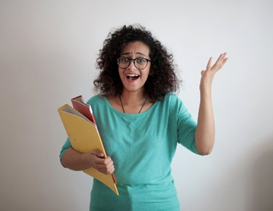 Non-verbal communication is a form of communication that accompanies or replaces spoken words. It is an integral part of communication, and understanding it, learning about the different types, and using this form skillfully can make you a better communicator.
Non-verbal communication involves communication through body language and various non-verbal signals that complement verbal messages and convey emotions. It may be conscious and intended to convey some specific information (e.g. shaking hands when greeting or congratulating) or subconscious, revealing emotional states that the person doesn’t always want to show (e.g. trembling voice during a speech, speaking of stress). Very important and useful both in everyday communication and in the coaching process is the ability to understand non-verbal communication and to control and consciously use different forms of this communication.
There are different types of non-verbal communication. Among them, the following can be mentioned:
- Body movements - one of the easiest forms to control, otherwise they are conscious gestures (e.g. thumbs up, nodding your head affirmatively or negatively).
- Personal space - the physical space between interlocutors that affects how comfortable they feel. The appropriate measure of distance will vary, depending on the relationship, the culture, and the person's personality.
- Posture - shows your attitude towards others and conveys information about the emotional state, it refers to the way of sitting or standing posture (crossed arms, legs speak of closure, open arms show openness to the other person, lying on the desk can mean boredom and lack of interest).
- Eye contact - a very important form that tells a lot about the interest, shows whether the person is listening or is thinking somewhere far away. The eyes can also show how a person is feeling, such as. whether a person is sad or distressed, cheerful or whether a person is telling the truth (if someone is running away with their eyes, that is, that this person is lying).
- Touch - plays a very important role in forming close relationships, but not only. Examples include hugging or shaking hands, placing a hand on the shoulder. It allows you to show someone affection, kindness, support, comfort, and can also speak of confidence or lack thereof.
- Para-language - refers to the volume and tone of voice, indicates the emotions that accompany the conversation (e.g. yelling when upset, a quiet calm tone when comforting, a firm statement when communicating important information, etc.). It can also include various individual sounds that accompany a conversation and can be aimed at e.g. showing understanding, amazement or interest.
- Facial expression - sometimes it is difficult to control it, it is one of the main indicators of a person's attitude. An example would be creasing your eyebrows or smiling.
- Physiology - this is a type of non-verbal communication that is very difficult to control because it involves physiological changes to the body that are often beyond our control (e.g. increased sweating from stress or rapid eye blinking).
 Links for the self-learning
- https://www.verywellmind.com/types-of-nonverbal-communication-2795397
- https://www.youtube.com/watch?v=1sfM-xx7tHI
- https://www.youtube.com/watch?v=2cO8wl1gBHM
5.2. The reasons and importance of using non-verbal communication in coaching
It is important that non-verbal communication complements verbal communication. There shouldn’t be a situation where verbal speech is contradicted by non-verbal speech. It has to be consistent and deliberate. Otherwise, it can cause confusion, lack of understanding, and a negative perception of the learner. Be aware that the way you look, listen, move and react sometimes says more than words. Developing the ability to understand and use non-verbal communication can help you express what you really mean, deal with difficult situations and build better relationships. It is also very important to understand the different types of non-verbal communication. This helps you to control the messages you convey, but also to decode the emotional states of others (in this case, your learners) and better understand their needs. In the event that something is left unsaid by a learner, you will be able to notice it due to your knowledge and understanding of non-verbal speech. In addition, appropriate use of non-verbal speech can help: show interest, avoid misinterpretation of the message, establish rapport, inspire trust and confirm authenticity.
5.3. Non-verbal communication in the coaching process – tips

The task of the coach is to make the learner feel good and comfortable, thus opening up and making the most of the coaching. Below are some tips on what to pay attention to.
- Use open body language (stand up and don't cross your arms), this way you will be perceived as an open person.
- Maintain eye contact with your learner, this way you can show your interest. However, remember to look away from time to time so that the learner doesn’t feel embarrassed.
- Use non-verbal signals that are consistent with what you say. Remember, if you say something but use body language to show something else, your listener may feel confused or you may not be credible.
- Use an appropriate tone of voice (don’t shout, try to speak confidently and firmly, sometimes it is good to show understanding and support by your tone of voice). Remember to consider your learner's emotional state and needs.
- Control your gesticulation. Every move should be thoughtful and validate what you are saying. Gestures should be consistent with words. Don’t wave your hands haphazardly, as this may annoy others.
- Keep a safe distance. Too close a distance between you and the learner can cause discomfort and insecurity.
- As the learner speaks, show interest and understanding by nodding your head, facial expressions (e.g. a slight smile), single sounds. Remember, however, that they should be appropriate to the situation and that they shouldn’t be misunderstood by the female learner such as in a situation where she will talk about her fears, difficulties, and you will laugh. Your inappropriate behaviour may shut her down and you may lose her trust.
- Don't look at your watch every now and then - you'll show a lack of interest by doing so.
- Remember to control your posture – while sitting in your chair, remember to keep your back straight - this will show respect and attention to the speaker.
- Avoid negative body language (cold stares, severe seriousness, contradictory head movements, tight lips, closed body position).
- Don't be afraid of physical gestures such as shaking hands, offering congratulations, patting on the shoulder. However, remember not to exceed the boundaries of the coach - learner relationship.
- Learn to read your learner's non-verbal cues. You can learn a lot about your female learner and her emotions and needs. This way, it will be easier for you to understand and help her. Watch for signs of nervousness, facial expressions. If the non-verbal behaviour seems to contradict the verbal message, it is likely that the speaker isn’t entirely happy with what she is saying.
- Don't just focus your attention on 1 gesture, but consider all the non-verbal cues you receive, from eye contact to tone of voice to body language. Remember that everyone can look away from time to time or cross their arms involuntarily for a moment. Consider all signals to better "read" the person.
- Be aware of cultural differences. Remember that non-verbal communication varies around the world and a given gesture can mean something completely different.
- Don't jump to conclusions; some signals can be misleading, such as, if someone has a sweaty forehead, it doesn’t necessarily mean that they are nervous. Maybe that person feels bad or is just hot.